
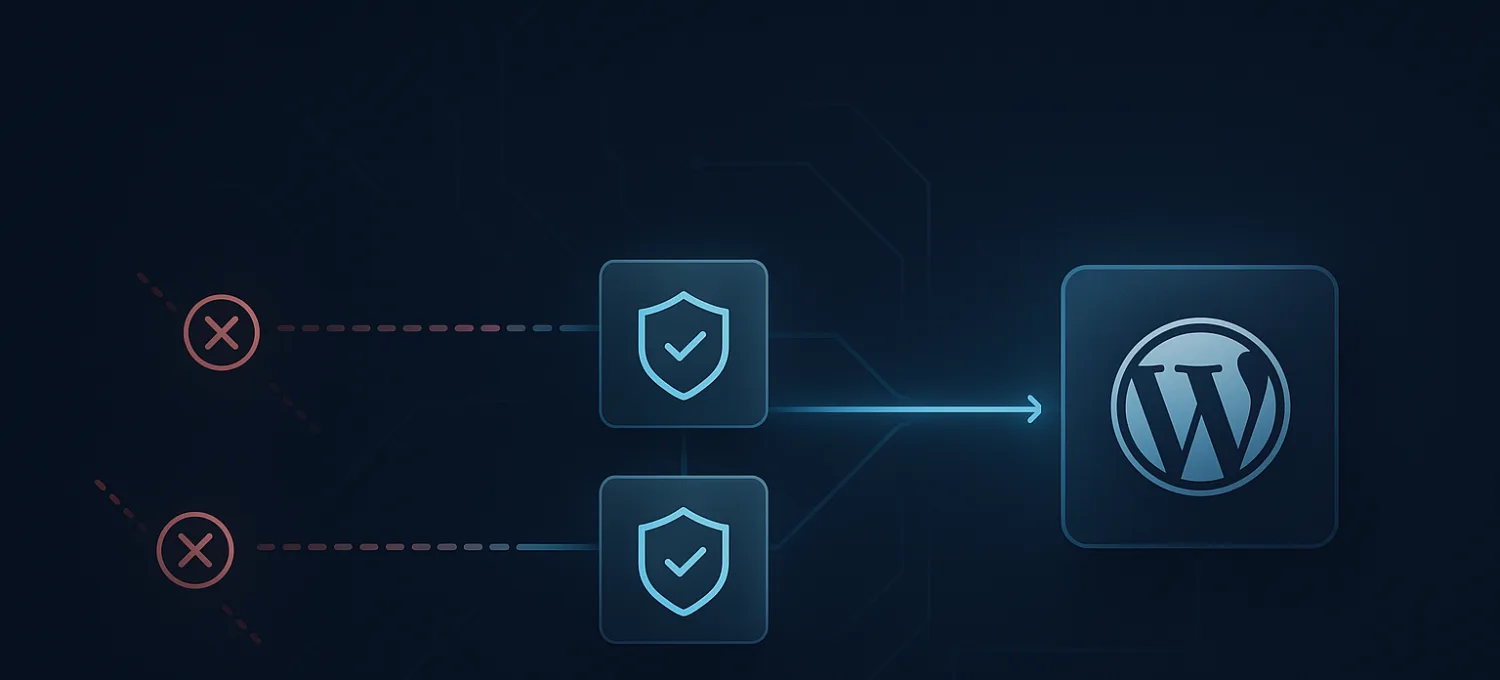
How to Protect WordPress APIs Without Breaking Real Traffic
WordPress sites expose more API-style traffic than many owners realize.
Some of it is obvious, like the REST API. Some of it is indirect, like checkout-related calls, plugin endpoints, admin-ajax requests, webhook receivers, and integration routes that are technically part of the application even if they do not look like a public page.
That makes API protection harder than simple page protection. If you block too loosely, abuse reaches origin and wastes application resources. If you block too aggressively, real integrations fail and normal site behavior starts breaking in ways that look random.
For WordPress, the real goal is not to shut down API traffic. It is to protect the expensive routes without breaking the valid ones.
Why WordPress API Traffic Needs Special Handling
API-like requests are different from ordinary browsing.
They are more likely to be:
- repeated rapidly
- unauthenticated but still legitimate
- called by integrations rather than browsers
- tied to checkout, search, account, or automation flows
- expensive for WordPress and WooCommerce to process
That means they are attractive to both attackers and real systems.
You cannot defend them well with the same assumptions you use for static pages.
What “API” Means on a WordPress Site
On WordPress, API traffic may include:
- REST API routes
admin-ajax.php- plugin or theme-specific endpoints
- webhook receivers
- checkout and payment callbacks
- token-authenticated application traffic
Some of these are critical to normal business operations. Others are common abuse paths. The mistake is treating them all the same.
Where Protection Usually Goes Wrong
Most failures happen in one of two directions.
The first is under-protection:
- public endpoints are left wide open
- repeated abuse reaches PHP and MySQL
- bots use dynamic routes to drain origin resources
The second is over-protection:
- webhooks start failing
- payment or checkout callbacks misfire
- API clients get blocked as if they were malicious
- legitimate application traffic looks “randomly broken”
For WordPress, both mistakes are common because the API surface is fragmented across core, plugins, and site-specific functionality.
Start With the Routes That Matter Most
The safest approach is route-aware protection.
That means mapping API-like traffic into categories instead of applying one generic rule to all of it.
Useful categories include:
- public but abuse-prone endpoints
- authenticated endpoints
- machine-to-machine integrations
- checkout or account-sensitive routes
- routes that should rarely be hit by anonymous traffic
This lets you protect the right path with the right control instead of using one blunt rule for everything.
Use Different Controls for Different Risks
Not every route needs the same response.
Examples:
- some endpoints need tighter rate limiting
- some need bot detection
- some need allowlisting for trusted integrations
- some need stricter header or method validation
- some should stay reachable but closely monitored
That is how you avoid turning API protection into accidental application breakage.
Why Origin-Side Protection Often Arrives Too Late
If a request reaches WordPress before you decide whether it is abusive, the stack may already have paid for:
- TLS termination
- PHP worker time
- WordPress bootstrap
- plugin loading
- database access
That is why edge controls matter so much for API-style traffic.
The earlier you reject obvious junk, the less origin work you waste on requests that were never supposed to reach the application.
Protecting Integrations Without Breaking Them
A lot of important WordPress traffic does not look like a normal human page view.
That includes:
- payment callbacks
- third-party service webhooks
- headless or application traffic
- monitoring checks
- custom integration endpoints
These should not be treated like anonymous browsing, but they also should not be left fully exposed.
The right pattern is:
- validate what the route is for
- identify what valid callers look like
- apply narrow exceptions where necessary
- keep the rest of the route behavior constrained
That preserves real traffic without leaving the endpoint wide open.
Where FirePhage Fits
For WordPress, API protection works best when it is path-aware, edge-first, and strict where the route justifies it.
That means:
- reducing origin waste on abusive requests
- preserving real integrations
- protecting expensive endpoints without blocking the application itself
- keeping checkout, account, and webhook flows stable under pressure
The job is not to stop all API traffic. It is to separate valid application behavior from junk traffic before origin pays the cost.
Final Take
Protecting WordPress APIs is not about shutting down dynamic traffic. It is about understanding which endpoints are public, which are sensitive, and which are essential to the application.
The best strategy is route-aware:
- protect abuse-prone endpoints aggressively
- preserve real integrations deliberately
- push obvious junk traffic away from origin early
That is how you secure WordPress APIs without breaking the site that depends on them.